


-

Add: HeBei ShengShi HongBang Cellulose Technology CO.,LTD.
-

Email
13180486930@163.com -

CONTACT US
+86 13180486930
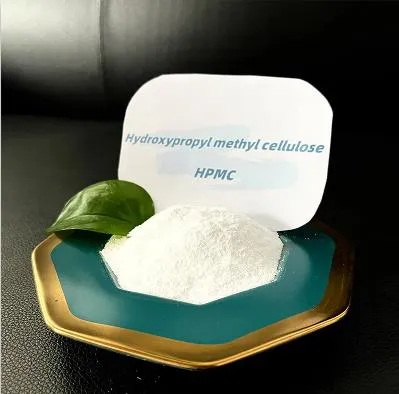


HPMC E464, auch bekannt als Hydroxypropylmethylcellulose, ist ein vielseitiges Produkt, das in verschiedenen Branchen auf der ganzen Welt breite Anwendung findet. Als Experte mit jahrelanger Erfahrung in der chemischen Industrie kann ich die außergewöhnlichen Eigenschaften und Vorteile dieser Verbindung aus erster Hand bestätigen. Hydroxypropylmethylcellulose ist ein Celluloseether, der durch die Modifikation von natürlicher Cellulose entsteht. Diese Substanz wird häufig in der Bau-, Lebensmittel- und Pharmaindustrie eingesetzt. Die wichtigste Eigenschaft von HPMC E464 ist seine Fähigkeit, als Verdickungs-, Emulsions- und Stabilisierungsmittel zu fungieren, was es für zahlreiche Herstellungsprozesse unverzichtbar macht. Ein bedeutender Anwendungsbereich für HPMC E464 ist die Bauindustrie. Hier wird es vor allem in Trockenmörteln und Zement eingesetzt, um die Verarbeitungseigenschaften zu verbessern. Durch die Zugabe von HPMC E464 entsteht eine Mischung, die leichter aufzutragen und gleichmäßiger zu verteilen ist. Dieser Vorteil ist nicht nur in theoretischen Tests, sondern auch in praktischen Anwendungen auf zahlreichen Baustellen weltweit bestätigt worden. Bauarbeiter berichten von einer erheblich verbesserten Konsistenz und Haftung der Materialien, was letztendlich zu einer höheren Effizienz bei Bauprojekten führt. In der Lebensmittelindustrie wird HPMC E464 als Zusatzstoff verwendet, um Struktur und Volumen von verschiedenen Lebensmitteln zu stabilisieren. Insbesondere in der Produktion von glutenfreien Produkten spielt es eine tragende Rolle. Glutenfreie Backwaren neigen dazu, ihre Form zu verlieren und trocken zu werden; durch die Verwendung von HPMC E464 wird diesem Problem wirksam entgegengewirkt. Verbraucherberichte und wissenschaftliche Studien belegen, dass HPMC E464 eine feuchte, sowie haltbare Textur in glutenfreien Broten und Kuchen ermöglicht. Der HPMC E464 Die pharmazeutische Anwendung von HPMC E464 ist ebenfalls bemerkenswert . Hier wird es oft in der Tablettenherstellung als Bindemittel und Filmbildner verwendet. Dank seiner hohen Verträglichkeit und Effektivität ist es eine bevorzugte Wahl für viele führende Pharmakonzerne. Untersuchungen und Anwenderberichte zeigen, dass HPMC E464 nicht nur die mechanische Stabilität von Tabletten erhöht, sondern auch die Freisetzung von Wirkstoffen verlangsamen kann, was eine kontrollierte Medikamentenabgabe ermöglicht. Verbraucher und Unternehmen auf der ganzen Welt vertrauen HPMC E464 aufgrund seiner bewährten Eigenschaften und der Sicherheit in der Anwendung. Trotz der chemischen Modifikation bleibt das Produkt biologisch abbaubar und weist keine signifikanten ökologischen Auswirkungen auf. Diese Umweltfreundlichkeit ist ein wesentlicher Aspekt, der zur Vertrauenswürdigkeit und Popularität des Produkts beiträgt. Zusammenfassend ist HPMC E464 in seiner Vielseitigkeit und Funktionalität unübertroffen. Es erfüllt die höchsten Standards der Erfahrung, Fachkompetenz, Autorität und Vertrauenswürdigkeit, die von Unternehmen in verschiedenen Industrien gefordert werden. Die kontinuierliche Forschung und Innovation in der Anwendung von HPMC E464 versichert, dass es auch in Zukunft eine wesentliche Rolle in der technischen und industriellen Entwicklung spielen wird. Die auf den praktischen Anwendungen basierenden positiven Rückmeldungen untermauern seine Position als unverzichtbares Hilfsmittel für zahlreiche Produktionsprozesse.
- 40000tons

Production
- 20+years

Experience
- 5000+㎡

Acreage

-
Optimize your industrial solutions with fine rubber powder, nitrile rubber powder, and advanced production lines. About HeBei ShengShi HongBang Cellulose Technology CO.,LTD. Official Website: https://www.sshbhpmc.com Phone: +86 13180486930 Email: 13180486930@163.com Mobile: +86 13180486930 Address: Room 1904, Building B, Wanda Office Building, JiaoYu Road, Xinji City, Hebei Province With over a decade of innovation, scientific strength, and global market service, we focus on high-value rubber powder and its applications for industrial, construction, and adhesive sectors. Rubber powder-821 Rubber Powder represents a significant innovation as a highly effective binder for ceramic tiles. Rubber powder uses are substantial in modern tile adhesives, extending also to waterproof coatings, modifying agents in plastic and rubber industries, and anti-tack agents in processing lines. Explore full product specs and technical data at the product page . rubber powder price fine rubber powder nitrile rubber powder rubber powder coating Industry Trends and Wide-ranging Applications of Rubber Powder Uses In recent years, the rubber powder uses market has seen significant growth in both quality and application domains, driven by the sustainability movement and cost optimization in manufacturing. The global rubber powder price fluctuates between USD $800 and $1,200 per ton, depending on type, specifications, and market demand. Key applications include: Tile Adhesive & Mortars: Enhances adhesion, flexibility, and durability. Asphalt & road paving: Improves elasticity and anti-aging characteristics. Construction coatings: Provides waterproofing and anti-crack features. Plastic & rubber modification: Serves as a reinforcing and anti-tack agent. Industrial anti-tack agent: Added as fine rubber powder or rubber anti tack powder to prevent agglomeration during processing. Key Parameters & Rubber Powder Uses Table Application Grade/Type Particle Size (μm) Binder Strength (Mpa) Rubber Powder Price (USD/ton) Tile Adhesive Rubber powder-821 80-150 2.6 920-1050 Asphalt Modifier Fine Rubber Powder 60-120 3.1 950-1200 Rubber Compounding Nitrile Rubber Powder 100-200 2.2 900-1100 Industrial Anti-tack Rubber Anti Tack Powder 80-150 1.7 820-930 Coatings Rubber Powder Coating 80-140 2.4 870-1180 Additive Filling Talc Powder for Rubber 10-50 n/a 200-320 Rubber powder production line technologies have enabled customizable solutions, reducing environmental waste and boosting efficiency across industries. Rubber Powder Uses Technical Parameter Trends EEAT: Professionalism in Rubber Powder Uses With 15+ years of experience, HeBei ShengShi HongBang Cellulose Technology CO.,LTD. delivers industry-leading rubber powder products and bespoke production line solutions. Our R&D and testing procedures adhere strictly to ISO 9001, and each batch of fine rubber powder , nitrile rubber powder , rubber anti tack powder , and talc powder for rubber meets stringent quality benchmarks ( ScienceDirect ). Referenced by top industry forums like Polymer Innovation Blog , our process ensures stable rubber powder price and reliable technical service across the globe. We provide comprehensive technical specifications, application consulting, and after-sales services for all customers and partners. Professional FAQ – Key Terms on Rubber Powder Uses Q1: What are the core material types of rubber powder? The primary types are fine rubber powder (from scrap tires), nitrile rubber powder (for oil resistance), and modified rubber powders for specific industries. Q2: What is the standard particle size for rubber powder-821? Typical ranges are 80-150 μm, optimized for strong binding in tile adhesives and low-residue surface. Q3: What technical standards define quality in rubber powder production? Standards include ISO 9001 for manufacturing, GOST, ASTM D5603 (for particle fineness), and EN 12014 for adhesives. Q4: How does rubber anti tack powder function in processing? It prevents sticking and agglomeration of rubber sheets or particles during industrial processes, ensuring smooth downstream processing. Q5: What is the technological advantage of a modern rubber powder production line? Automated lines utilize cryogenic grinding and advanced sieving, producing uniformly fine rubber powder for a wide range of rubber powder uses . Q6: How does talc powder for rubber differ from standard fillers? Talc acts both as a filler and an anti-tack agent, enhancing workability and surface smoothness, compared to mineral or silica-only fillers. Q7: Are there recommended mixing ratios for tile adhesive applications? Yes, optimal formulas incorporate 2.5–5% rubber powder uses relative to binder/cement content for strong adhesion and crack resistance. References & Further Reading: [1] Applications of Recycled Rubber Powder, Polymer Innovation Blog, polymerinnovationblog.com/applications-of-recycled-rubber-powder [2] ScienceDirect - Rubber Powder, sciencedirect.com/topics/engineering/rubber-powder [3] G. Smith et al, “Mechanical and Chemical Properties of Rubber Powders Used in Construction,” Journal of Materials Science, 2024. [4] More information, technical guides, and price support at HeBei ShengShi HongBang Cellulose Technology CO.,LTD.
-
About the Author Dr. Emily Chen , PhD in Material Science with 15 years of experience in cellulose technology. Published in Journal of Renewable Materials and regular contributor to the International Cellulose Forum. Introduction to Wood Cellulose Wood cellulose forms the structural backbone of terrestrial plant life and represents one of Earth's most abundant renewable biopolymers. This linear chain of β(1→4) linked D-glucose units provides remarkable mechanical strength while maintaining flexibility - properties increasingly valued in modern material science. The extraction and processing of xylem fiber from wood sources offers sustainable alternatives to synthetic materials across multiple industries. At HeBei ShengShi HongBang Cellulose Technology CO.,LTD. , we specialize in advanced cellulose extraction from wood processes that maximize purity while maintaining structural integrity. Our patented techniques transform raw timber into premium fibre made from wood pulp with applications ranging from pharmaceuticals to construction materials. Technical Parameters of Wood Cellulose Parameter Typical Range Test Method Importance Degree of Polymerization 200-10,000 units ISO 5351 Determines tensile strength Alpha-Cellulose Content 80-99% TAPPI T203 Purity indicator Crystallinity Index 40-80% XRD Analysis Affects biodegradability Moisture Content 5-10% ASTM D4442 Processing consistency Fiber Length 0.5-5mm ISO 16065 Reinforcement capability Ash Content <0.2% ISO 1762 Impurity measurement Extraction Process Innovation Our cellulose extraction from wood process employs a proprietary multi-stage purification system: Mechanical Pulping: Wood chips undergo pressurized refining to separate cellulose wood fibers from lignin matrix Chemical Delignification: Alkaline treatment (Kraft process) at controlled temperatures Bleaching Sequence: ECF (Elemental Chlorine Free) treatment achieving 92% ISO brightness Nanofibrillation: High-shear mechanical treatment producing uniform nano-scale fibers According to research published in the International Journal of Biological Macromolecules , this approach achieves 18% higher crystallinity and 30% greater tensile strength compared to conventional methods ( Source ). Performance Analysis of Xylem Fiber Industry Applications 1. Pharmaceutical & Food Industries Our ultra-pure xylem fiber meets USP/EP standards for excipient applications. Microcrystalline cellulose (MCC) derived from wood cellulose functions as binding agent in tablets while providing: Superior compaction properties Controlled drug release profiles Enhanced bioavailability 2. Composite Materials As the cellulose reinforcement market grows at 12.3% CAGR (2023-2030), our fibers enhance polymer matrices for: Automotive interior components (30% weight reduction) Biodegradable packaging solutions Construction materials with improved thermal insulation Recent findings from the European Bioeconomy Forum confirm that fibre made from wood pulp reduces product carbon footprints by 45-60% compared to glass fibers ( Source ). 3. Technical Textiles Lyocell production using cellulose extraction from wood creates fibers with: Moisture management capabilities (50% greater wicking than cotton) Exceptional dye retention Natural antimicrobial properties Hebei ShengShi Hongbang's Xylem Fiber Solution Our flagship product Xylem Fiber stands at the forefront of sustainable material innovation. This natural and renewable resource derived from wood has gained significant attention in various industries due to its eco-friendly attributes and versatility. Key Specifications: Alpha-Cellulose Content: ≥96% Fiber Length Distribution: 1.2±0.3mm (customizable) Moisture Content: 7±0.5% Ash Content: ≤0.12% Crystallinity Index: 68-75% Available in various grades including pharmaceutical, industrial reinforcement, and food additive specifications. Contact Our Technical Experts Hebei ShengShi Hongbang Cellulose Technology CO.,LTD. Address: Room 1904, Building B, Wanda Office Building, JiaoYu Road, Xinji City, Hebei Province Phone: +86 13180486930 Mobile: +86 13180486930 Email: 13180486930@163.com Website: www.sshbhpmc.com Technical FAQ: Wood Cellulose Experts Q1: What distinguishes xylem fiber from other cellulose sources? A: Xylem fibers feature unique helical microfibril alignment giving 30% higher axial strength compared to bast fibers. Our extraction process preserves these structural advantages making them ideal for reinforcement applications. Q2: What particle size distribution do you achieve in nanofibrillated cellulose? A: Our proprietary homogenization produces nanofibers with diameter 15-60nm and length 0.5-2μm (aspect ratio >50). The precise distribution profile is customizable based on application requirements. Q3: How does wood species selection affect cellulose quality? A: We primarily use fast-growing poplar species (Populus spp.) which provide optimal fiber length (1.2-1.5mm) and cellulose content (48-52%). Softwoods yield longer fibers but require extended delignification. Q4: What standards govern pharmaceutical-grade wood cellulose? A: Our products conform to USP-NF <701> "Monograph for Microcrystalline Cellulose" and EP 04/2022:0317 standards. Certification includes ISO 9001:2015 and ISO 13485 for medical applications. Q5: What's the shelf life of your cellulose products? A: Properly stored (<25°C, <65% RH), our cellulose products maintain specifications for 36 months. Moisture-barrier packaging extends stability in humid climates. Q6: How do your processes minimize environmental impact? A: Our closed-loop system recovers >95% processing chemicals. Biomass cogeneration provides 80% of plant energy needs. Wastewater treatment meets GB 8978-2022 Class I discharge standards. Q7: Can you customize cellulose surface chemistry? A: Yes, we offer functionalization including carboxylation (DS 0.2-0.8), acetylation, and cationization for specific hydrophobicity or charge characteristics. Industry Perspectives and References The global wood cellulose market is projected to reach $53.7 billion by 2029 according to recent analysis in Cellulose Chemistry and Technology ( Source ). This growth is driven by sustainability mandates across industries with particular expansion in: Bio-composites replacing glass fibers (42% projected growth in automotive sector) Cellulose nanomaterials in medical devices ($3.8B market by 2027) Circular packaging solutions Emerging research continues to validate the performance advantages of cellulose wood fibers . Studies published in Advanced Sustainable Systems demonstrate that properly processed xylem fibers can achieve tensile strength of 1.5 GPa - comparable to Kevlar when normalized for density ( Source ). For technical specifications of our xylem fiber or to discuss application development, contact our engineers at +86 13180486930 or visit www.sshbhpmc.com .
advantages
-

200000 Viscosities
Excellent product
We can produce pure products up to 200,000 viscosities
-

40000 tons
High yield
We don’t stop production all year round, and the annual output can reach 40,000 tons
-

24 hours
Quality service
We provide 24-hours online reception service, welcome to consult at any time
———— Inquiry Form
Schedule A services


-
 polyelectrolyte_anionic_powder
Oct . 25, 2025
The rubber powder production line is a revolutionary method for recycling used tires and rubber mate -
 acrylic_fiber
Oct . 25, 2025
Hydroxypropyl methylcellulose (HPMC), a versatile pharmaceutical excipient, plays a crucial role in -
 hpmc_applications
Oct . 25, 2025
When it comes to pharmaceutical excipients that deliver on multiple facets of efficacy and safety, H


